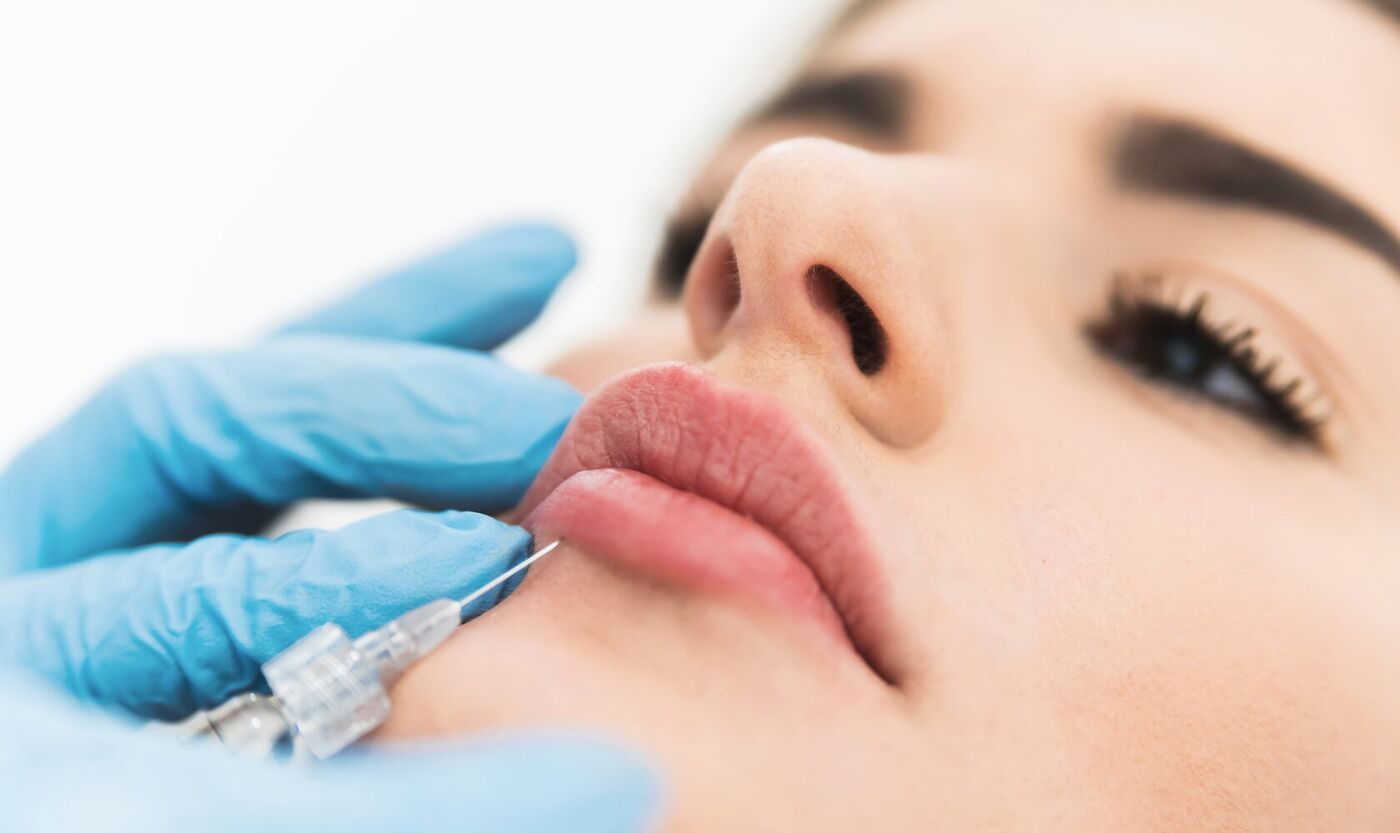
Overview
Facial ultrasound gives a non-invasive, radiation-free view of the tissue under the
skin. Depending on the clinical situation it may assist with evaluating facial anatomy,
identifying important blood vessels, assessing existing filler, evaluating lumps or
nodules after cosmetic procedures, guiding filler dissolving when appropriate,
supporting ultrasound-guided injections, and enhancing treatment planning.
Facial vasculature does not follow the textbook. Two people with the same face shape
can have arteries running at different depths and along different courses, and the
surface landmarks injectors are taught do not reveal that. Imaging replaces an average
with your anatomy.
What a facial ultrasound is used for
Facial vascular mapping
Evaluation of previous dermal filler
Assessment of lumps, nodules, and areas of concern
Treatment planning before injectables
Ultrasound-guided filler dissolving
Ultrasound-guided injections when appropriate
Filler correction and dissolving: filler placed somewhere else
This is the appointment most people arrive for. You had filler somewhere else. It does
not look right, or it has moved, or there is a lump that has not settled, or nobody has
been able to tell you what is actually in your face. You may have been told to wait and
see.
Imaging gives you something better than waiting: information. Ultrasound is the only
practical way to look at filler in place, in real time, without surgery. Dr. Lawson is
double board-certified in vascular and interventional radiology — reading ultrasound is
the work she trained in and did in hospitals for more than a decade before she brought
it into aesthetics.
Filler identification — what is in there, and where
In many cases ultrasound can help evaluate the presence and location of previously
placed dermal filler, although findings vary by product and clinical circumstances.
The scan shows where product sits, at what depth, and how it relates to the structures
around it. That matters because it changes the plan: what can be treated, what should
be left alone, and what is not filler at all.
One honest limit up front. Not every filler behaves the same way on ultrasound, and
not every filler can be dissolved — hyaluronic acid products can be broken down with
hyaluronidase, and other products cannot. Establishing which you are dealing with is
part of the reason to image before treating.
Mapping migration — product that has moved
Filler can settle away from where it was placed. Under-eye and lip borders are the
areas patients ask about most often. Ultrasound may help identify product sitting
outside its intended compartment and show its depth, its extent, and its relationship
to nearby vessels. Seeing that is what separates "you have puffiness" from "there is a
defined deposit here, at this depth, and this is what treating it would involve."
Ultrasound-guided dissolving
When dissolving is appropriate, ultrasound can help localize filler and guide
treatment planning for the procedure. Locating a deposit first means hyaluronidase can
be directed at the product that is actually causing the problem, rather than treating
the whole area as one. It also means the result can be reassessed on screen rather than
estimated from the outside.
Dissolving is not always the right answer, and it is not offered as a default. Some
findings are better left to settle, and some are not filler-related at all. You will be
told which of those applies to you.
Vascular complication assessment
Ultrasound may assist the physician in evaluating areas of concern after a cosmetic
procedure — nodules, inflammatory reactions, and changes that appear in the days or
weeks after treatment — and in planning appropriate management. Where a finding needs
care beyond what this practice provides, Dr. Lawson will say so and recommend referral
or additional medical evaluation.
If your symptoms are acute, do not wait for an appointment. Severe or
increasing pain, skin that has gone white, dusky or mottled, or any change in vision
after an injectable treatment needs immediate medical attention. Call us on
(954) 807-2748; outside our opening hours, go to an
emergency department.
What to do next
Book a facial ultrasound consultation. You do not need to be an existing patient, and
you do not need records from wherever you were treated — bring them if you have them.
The scan is non-invasive, uses no radiation, and takes only a small amount of gel on
the skin. Dr. Lawson performs it and reads it, and you will be talked through what is
on the screen while you are in the chair.
Before an injectable treatment
Filler rescue is one half of this service. The other is what happens before anything
is injected. Vascular mapping identifies the important vessels in the area being
treated, so placement is planned around real anatomy rather than around an average —
and, where it is appropriate, the injection itself can be performed under ultrasound
guidance.
That applies most directly to dermal fillers and
full facial balancing, and it informs planning for
Sculptra,
PDO threads and
neurotoxin treatment as well.
Read why we work this way.
Who may benefit?
Patients considering injectables, those with previous filler, concerns after cosmetic
procedures, individuals interested in filler dissolving, and patients seeking
physician-guided treatment planning may all benefit from ultrasound assessment when
clinically appropriate. Patients travel to the Flamingo Road practice from Cooper City,
Davie, Weston, Pembroke Pines and across Broward County, and often from further afield
— there are very few places in South Florida offering this.
 Ivy Wellness& Aesthetics
Book Now