Veins are Dr. Lawson's actual specialty, not an add-on service.
Overview
Spider veins are small, dilated blood vessels that sit close to the surface of the skin.
They appear as red, blue or purple lines that branch like a web or a tree, most often on
the legs and ankles, and sometimes on the face, chest and abdomen. They are rarely
dangerous. They are also, for a lot of people in South Florida, the reason a pair of
shorts stays in the drawer.
What makes this practice different is who is looking at them. Dr. Ivy Lawson, MD, is a
double board-certified vascular and interventional radiologist. Veins are the tissue she
spent more than a decade imaging and treating in hospital settings before she opened an
aesthetics practice. No other med spa in Cooper City can say that, and it changes what
happens at the assessment.
Why spider veins form
Spider veins, or telangiectasias, develop when the small valves inside a vein weaken.
When those valves stop closing properly, blood pools, the vessel expands, and it becomes
visible through the skin. Common contributors include:
Genetics — if your parents had them, you probably will too
Hormonal change — pregnancy, puberty and menopause all shift vein behavior
Prolonged standing or sitting — long shifts on your feet load the leg veins
Aging — vein walls lose elasticity over time
Spider veins or varicose veins?
Both are manifestations of vein disease, but they are not the same problem. Spider veins
are small, flat and close to the surface, and are treated as a cosmetic concern.
Varicose veins are larger, bulging and rope-like, often on the thighs, calves or inner
leg, and can bring heaviness, swelling, aching, restless legs and — in advanced cases —
skin changes or ulceration. Varicose veins can indicate underlying venous insufficiency
and are usually managed as a medical condition through insurance-based vein care rather
than cosmetically.
Knowing which one you have is the first decision, and it is a diagnostic one.
Why we look before we treat
Around 30 percent of people with visible spider veins have an underlying problem deeper
in the leg: chronic venous insufficiency. If the feeder veins below the surface are under
pressure or have failing valves, they keep pushing blood into the small surface vessels.
Treat only what you can see and the veins come back — or new ones appear beside them.
That is what the
vein ultrasound at our
Ultrasound Center is for. Diagnostic ultrasound is used
to evaluate the superficial veins, identify feeder and reticular veins when appropriate,
and plan cosmetic vein treatment around the actual anatomy. It is non-invasive, uses no
radiation, and takes the guesswork out of a treatment that otherwise runs on assumption.
Your treatment options
Sclerotherapy
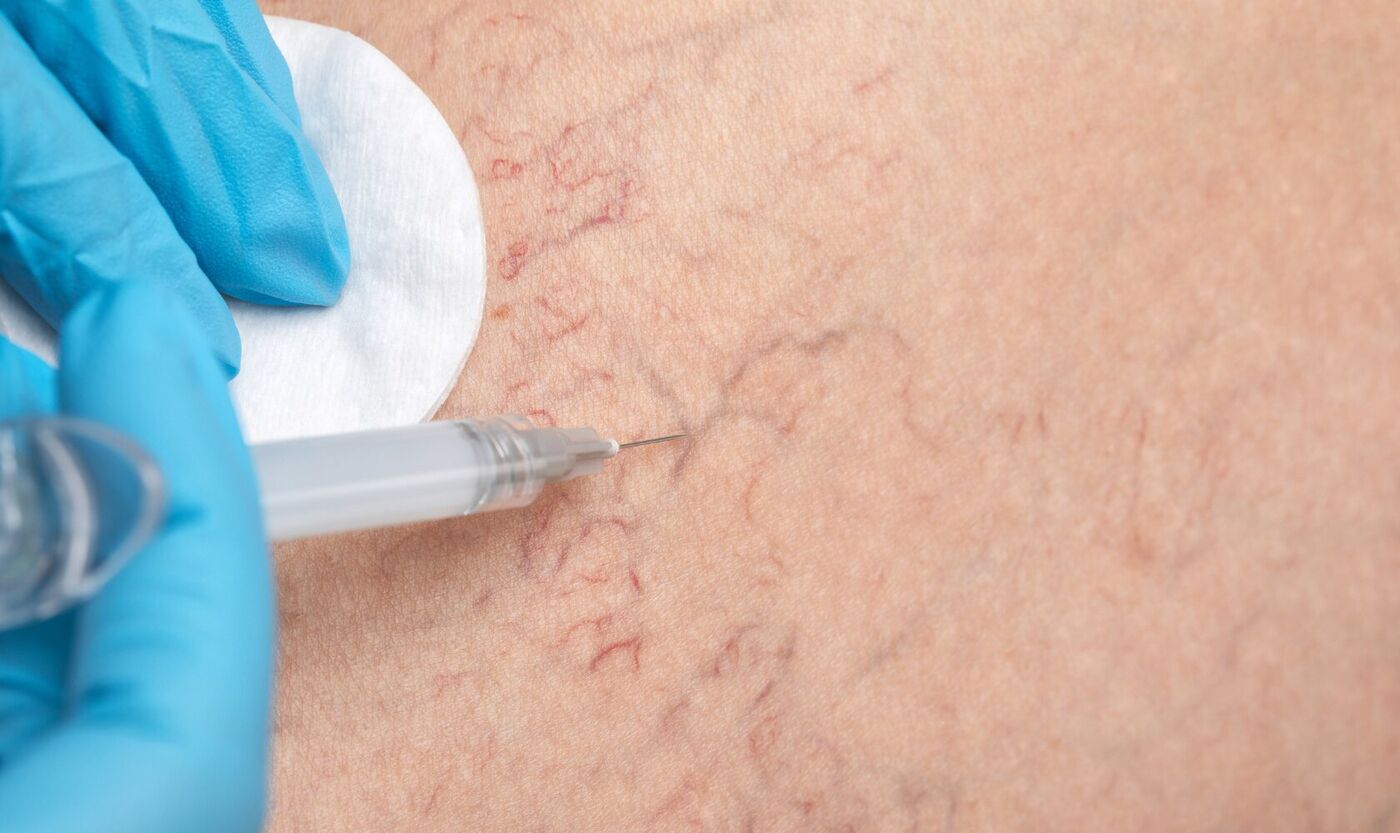
A sclerosing solution is injected into the vein with a very fine needle. The solution
irritates the vein lining so the walls swell, stick together and collapse; over the
following weeks the vein is absorbed by the body and fades from view. Sclerotherapy is
the workhorse for leg veins, and is usually the right choice for larger feeder veins and
medium-sized blue or purple vessels.
Read the full sclerotherapy page for how the
appointment, aftercare and healing actually go.
Surface vein laser and IPL
Light-based treatment targets the pigment in the vessel without damaging the surrounding
tissue. It works best on very fine, surface-level red veins that are too small for a
needle — particularly the broken capillaries and thread veins that show up around the
nose and cheeks. Multiple sessions are required. These treatments are delivered through
our laser skin rejuvenation and IPL platform.
When neither is the answer
If your assessment points to significant venous insufficiency or true varicose disease,
the honest answer is that cosmetic treatment is not the first step. You will be told
that, and pointed toward appropriate medical vein care, rather than sold a series of
sessions that will not hold.
Facial spider veins and broken capillaries
Fine red vessels on the nose, cheeks and chin behave differently from leg veins and
respond well to light-based treatment. They are often part of a broader redness pattern
and are commonly treated alongside
laser skin rejuvenation rather than on their
own.
What to expect
Treatment is done in the office, without anesthesia, and you walk out afterwards.
Most patients need between two and four sessions spaced several weeks apart. Small veins
typically fade within three to six weeks; larger vessels can take three to four months
for the final result. Bruising, faint brown lines where a vein used to be, and small firm
areas of trapped blood are all normal parts of healing rather than signs of failure.
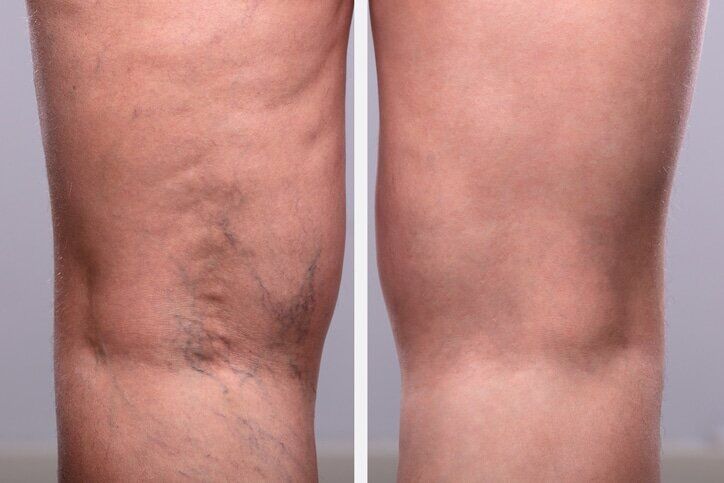
Before and after spider vein treatment of the lower leg.
Individual results vary. The number of sessions required and the
degree of clearance achieved differ from patient to patient, and no specific outcome is
guaranteed.
Why Ivy Wellness & Aesthetics
The vein clinics in this market treat varicose vein disease through insurance. The med
spas in this market do not treat veins at all. Ivy Wellness & Aesthetics sits in the
gap: an aesthetics practice run by a vascular physician, where a cosmetic leg vein gets
the same anatomical assessment a medical one would. We see patients from Cooper City,
Davie, Weston, Pembroke Pines, Southwest Ranches and across Broward County.
What vein treatment feels like
Most patients find it very tolerable. Sclerotherapy uses an extremely fine needle and feels like a small pinch or a brief stinging as the solution enters the vein. Laser treatment of fine surface vessels feels like a quick snap of heat.
Sensitivity differs from person to person and between treatment areas. If discomfort is
a concern for you, raise it at your complimentary consultation — it is a normal thing to
ask and it changes how the appointment is planned.
What clearing spider veins costs
The cost cannot be quoted before the veins are examined, and that is not evasion. It is
the entire point of the assessment. Two people with visually similar legs can need
completely different treatment.
Which treatment the veins actually need. Injection and light-based
treatment are priced differently, and which applies is decided by vessel size and
location rather than by preference.
How widespread the veins are. A few facial capillaries around the
nose are a short appointment. Leg veins across both calves are a course.
How many sessions. Both sclerotherapy and light-based treatment
work over a series spaced weeks apart.
Whether a vein ultrasound is indicated. Where something is feeding
the veins, imaging comes first, because treating the visible vein and leaving its
source is how people end up paying twice.
Your consultation is complimentary and it is a diagnostic conversation rather than a
sales one. You will be told which treatment your veins need, how many sessions to plan
for and what that costs, before anything is booked. If the answer is that cosmetic
treatment is not appropriate yet, you will hear that too.
Memberships carry member pricing on advanced treatments, and
financing is available for longer courses.
Frequently asked questions
What causes spider veins on the legs?
Spider veins, or telangiectasias, occur when the small valves inside your veins weaken. When those valves do not close properly, blood pools and the vessel expands until it becomes visible through the skin. Genetics, hormonal changes such as pregnancy and menopause, prolonged standing or sitting, and normal aging all contribute.
Are spider veins the same as varicose veins?
No. Spider veins are small, dilated vessels close to the surface that look like red or blue webs or tree branches. Varicose veins are larger, bulging and rope-like, and can cause heaviness, swelling and aching. Spider veins are primarily a cosmetic concern, while varicose veins can indicate underlying venous insufficiency that needs medical attention.
Can spider veins be a sign of something more serious?
Sometimes. Around 30 percent of people with visible spider veins have chronic venous insufficiency deeper in the leg. If the deeper feeder veins are under pressure or have failing valves, they keep pushing blood into the surface veins, which is why treated veins can reappear when only the surface is addressed.
Do I need an ultrasound before treatment?
Not always, but it is the reason results last. Diagnostic ultrasound is used to evaluate the superficial veins and identify feeder and reticular veins when appropriate, so treatment is planned around what is actually driving the veins rather than what is visible on the surface.
Sclerotherapy or laser — which is better for my veins?
It depends on the vein. Sclerotherapy is usually best for larger feeder veins and medium-sized blue or purple vessels. A surface vein laser is often better for very fine, surface-level red veins that are too small for a needle, including facial capillaries. Matching the tool to the vein is the difference between clearance and a disappointing result.
How many treatments will I need?
Most patients need between two and four sessions, spaced several weeks apart, to reach full clearance. Each session treats additional veins and builds on the last.
Do spider veins come back after treatment?
Veins that are successfully treated and absorbed by the body are gone. Treatment does not prevent new spider veins from forming later if you have a genetic predisposition, hormonal changes, or spend long hours standing.
Is spider vein treatment covered by insurance?
Treatment of spider veins is considered cosmetic and is self-pay. Varicose veins and venous insufficiency are a different category and are often handled through insurance-based vein care.
Does spider vein treatment hurt?
Most patients find it very tolerable. Sclerotherapy uses an extremely fine needle and feels like a small pinch or a brief stinging as the solution enters the vein. Laser treatment of fine surface vessels feels like a quick snap of heat.
Do I have to wear compression stockings afterwards?
After sclerotherapy, yes. Medical-grade compression stockings are worn for roughly one to two weeks so the treated vein walls stay closed while they heal.
How much does spider vein treatment cost?
It depends on which treatment your veins actually need, since injection and light-based treatment are priced differently, along with how widespread the veins are, how many sessions the course takes and whether a vein ultrasound is indicated first. The assessment comes before any quote, and your consultation is complimentary.
Find out what is actually feeding those veins
Book an assessment with Dr. Ivy Lawson — a vascular physician, reading your legs properly.
 Ivy Wellness& Aesthetics
Book Now