Overview
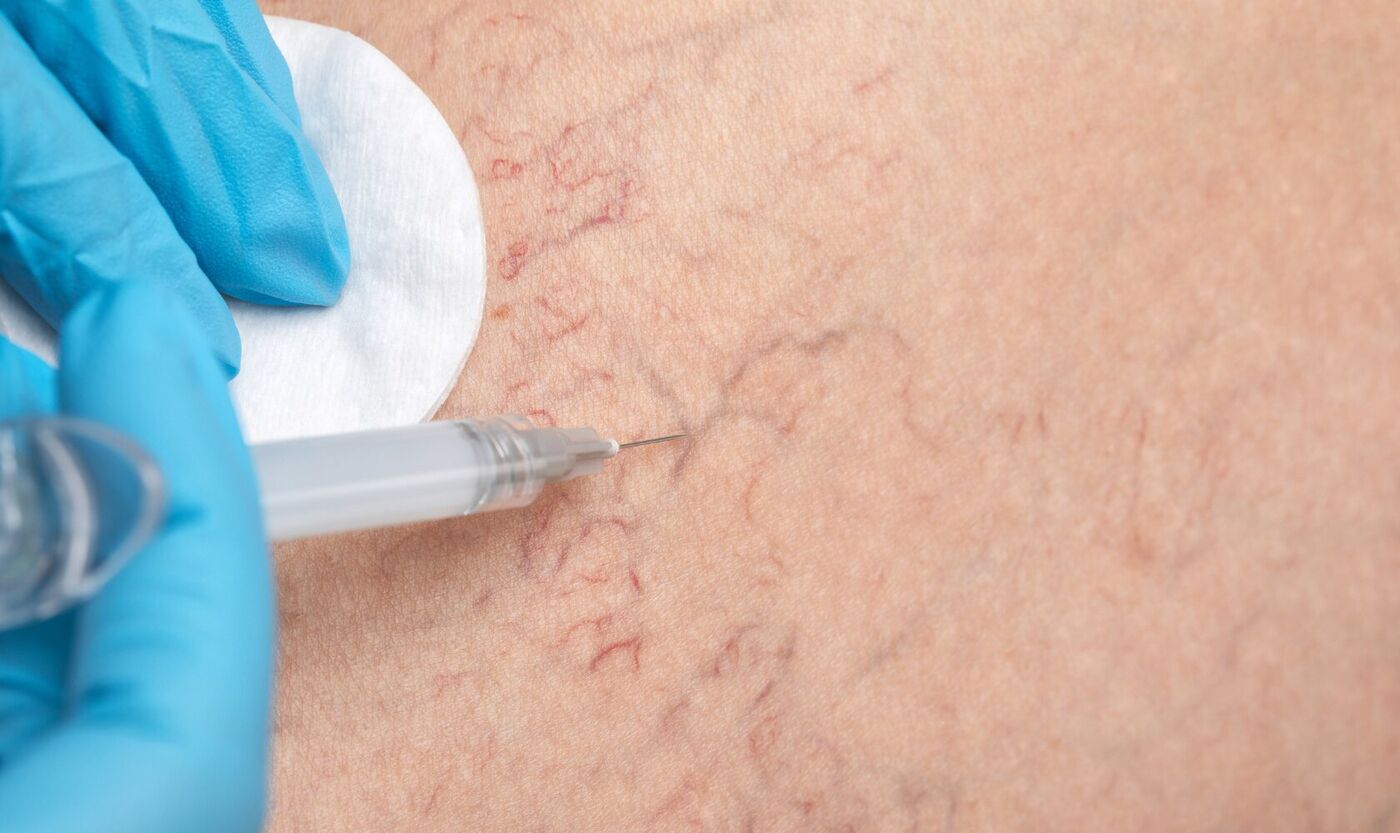
Sclerotherapy is a time-tested medical procedure for eliminating spider veins and small
varicose veins. A specialized liquid or foam solution, called a sclerosant, is injected
directly into the targeted vein through a very fine needle. Agents such as Asclera are
used for this purpose.
The solution irritates the lining of the blood vessel, causing it to swell and stick
together. Over the following weeks the treated vein collapses, becomes scar tissue, and
is absorbed by the body's own metabolic processes. It is an outpatient procedure. There
is no anesthesia, no hospital, and no meaningful downtime.
At Ivy Wellness & Aesthetics it is performed by Dr. Ivy Lawson, MD, a double
board-certified vascular and interventional radiologist. If you are weighing sclerotherapy
against other options, or you are not yet sure what kind of veins you have, start with
spider vein treatment instead — that page
covers the condition and the full range of options.
Mapping before injecting
Surface veins are often fed by larger reticular and feeder veins sitting below them.
Where the pattern of veins suggests that is happening, a
vein ultrasound is performed first so
the feeder is treated rather than only the branch. This is the part most cosmetic
sclerotherapy skips, and it is the usual reason treated veins reappear.
Your appointment, step by step
Assessment. Your legs are examined to confirm you are a candidate,
and your medical history and goals are reviewed. Ultrasound mapping is recommended here
if it will change the plan.
Injection. Using a very fine needle, the sclerosant is placed into
each targeted vein. Most patients describe a tiny pinch or a mild, temporary stinging.
Duration. Depending on how many veins are being treated, a session
typically runs 15 to 30 minutes.
Immediately after. A small bandage is applied, and you are usually
encouraged to walk straight away to stimulate blood flow.
Aftercare
Recovery is straightforward, but the aftercare is what protects the result.
Compression is key. Medical-grade compression stockings are worn for
about one to two weeks. They keep gentle pressure on the treated vein walls so they
stay collapsed while they heal.
Keep moving. Daily walking is encouraged. It keeps blood circulating
and reduces the risk of clot formation in deeper veins.
Avoid intense heat. No hot tubs, saunas or intense sun for at least
48 hours — heat causes treated vessels to dilate and re-open.
Protect from the sun. Keep the treated area covered from the Florida
sun to prevent darkening of the skin at the injection sites.
Sessions and timeline
Many people see a noticeable difference after a single visit, but most patients need
between two and four sessions to reach total clearance. Sessions are spaced several weeks
apart to give the body time to absorb the collapsed veins. Small veins typically fade
within three to six weeks; larger vessels can take three to four months for the full
result.
What normal healing looks like
Legs often look worse before they look better, and that is expected rather than a sign
the treatment failed. In the weeks after a session you may see:
Bruising — small spots around the injection sites
Hemosiderin staining — a faint brown line where the vein used to be,
which is iron from the blood held in the skin while the vein resolves
Trapped blood — small, firm areas that can feel like a tiny pebble
Most of this settles on its own. Judging the result two weeks after an appointment is
judging it halfway through.
Before your appointment
Skip lotion and moisturizer on your legs on the day of treatment
Wear loose, comfortable clothing
Tell us about any medications or supplements you take — some may need to be paused
Avoid sun exposure and tanning beds for a few weeks beforehand, as tanned skin makes
accurate injection harder
When sclerotherapy is not the right tool
Sclerotherapy suits larger feeder veins and medium-sized blue or purple vessels. Very
fine, surface-level red veins — particularly facial capillaries around the nose and
cheeks — are usually too small for a needle and respond better to
laser and IPL treatment. Where an assessment
points to true varicose disease or significant venous insufficiency, cosmetic injection
is not the first step and you will be told so.
Why Ivy Wellness & Aesthetics
Sclerotherapy is a simple procedure that is easy to do adequately and hard to do well.
The difference sits in the assessment: which vein is feeding which, which vessels to
treat in what order, and when to image before injecting. That is ordinary work for a
vascular and interventional radiologist. We treat patients from Cooper City, Davie,
Weston, Pembroke Pines, Southwest Ranches and across Broward County.
What sclerotherapy feels like
Most patients find the procedure very tolerable. The needle is extremely thin. You may feel a slight prick or a mild burning sensation for a few seconds as the solution enters the vein, and it subsides quickly.
Sensitivity differs from person to person and between treatment areas. If discomfort is
a concern for you, raise it at your complimentary consultation — it is a normal thing to
ask and it changes how the appointment is planned.
How sclerotherapy is priced
Sclerotherapy is charged by the session, which makes the real question how many
sessions your legs need. That is answered by looking at the veins, not at a price
list.
How much vein there is. A small cluster behind one knee and
widespread veins across both legs are different courses of treatment.
One leg or both. Most people assume both. Plenty of plans only
need one.
The size and type of vessel. Larger feeder veins and very fine
surface vessels behave differently, and the finest ones are often better treated with
light than with a needle.
Whether imaging comes first. Where the pattern suggests a feeder
vein is driving it, ultrasound mapping precedes injection so the right vessel is
treated in the right order.
Sessions are spaced several weeks apart, so the cost of a course arrives in stages
rather than all at once. And if your assessment points to true venous insufficiency, you
will be told that cosmetic injection is not the first step, rather than sold a series
that will not hold. Your consultation is complimentary and ends with a session plan and
its cost. Memberships carry member pricing on advanced
treatments, and patient financing is available for longer
courses.
 Ivy Wellness& Aesthetics
Book Now