Two ways to exfoliate
Most skin plans start with exfoliation. Dermaplaning and microdermabrasion both remove
the dull surface layer, but they do it differently and they suit different skin. Both
are performed by our experienced estheticians alongside physician-directed treatment
plans, and both can be performed on their own or built into a
customized facial.
Dermaplaning
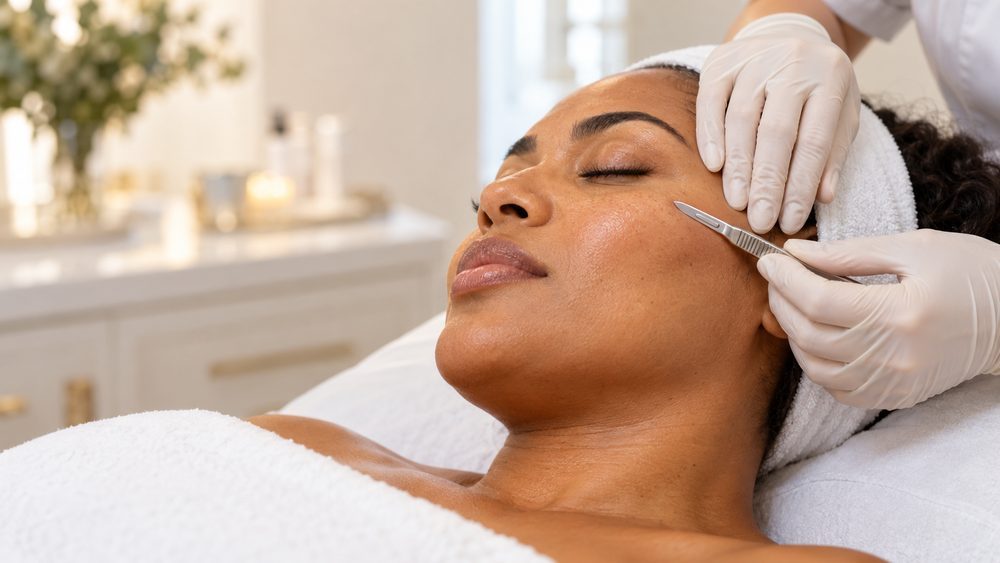
Dermaplaning gently removes dead skin cells and fine vellus hair (peach fuzz) using a
sterile surgical blade. The result is smoother, brighter skin with improved product
absorption and flawless makeup application. Dermaplaning may be performed alone or
combined with customized facials,
chemical peels,
regenerative treatments, or JuvaSonic®
needle-free serum infusion.
Microdermabrasion
Microdermabrasion uses controlled mechanical exfoliation to improve dull skin, enlarged
pores, uneven texture, mild acne scarring, and sun damage. Following exfoliation,
treatments may be enhanced with JuvaSonic® technology to infuse physician-selected
ingredients such as hyaluronic acid for hydration, GHK-Cu copper peptides to support
collagen production, or platelet-rich plasma
(PRP) for regenerative skin rejuvenation — without needles.
Where exfoliation fits in your plan
On its own, exfoliation is maintenance: it keeps the surface clear, helps your
medical-grade products reach skin that can use them, and makes makeup sit properly. That
is a perfectly good reason to book it, and for a lot of patients it is the whole
appointment.
It also does useful work in front of other treatments. Clearing the surface first is why
dermaplaning is so often paired with a peel, and
why exfoliation sits early in a plan that goes on to include
microneedling or
Aerolase and IPL. What it will not do is
correct pigment, laxity or scarring by itself — if that is what is bothering you, your
provider will say so and route you to the treatment that will. Patients come to our
Flamingo Road practice from Cooper City, Davie, Weston and Pembroke Pines, and the
sequencing is decided at your first appointment rather than sold up from the chair.
What exfoliation actually feels like
Neither treatment involves a needle, and both are more often described as unusual than as uncomfortable. Dermaplaning is a sterile blade drawn across taut skin at an angle: the sensation is a light scraping, closest to a dry shave, and first-time patients tend to notice the sound more than the feeling. Microdermabrasion is a gritty, sandpaper-like pass combined with suction, so the skin is pulled slightly as the applicator moves.
Both leave the skin pink and a little sensitive for a short while, and products applied afterward can tingle on freshly exfoliated skin. Skin that is inflamed, sunburned or actively breaking out reacts more, which is one reason it is assessed before anything is done. If you are unsure which suits your skin or your tolerance, that is settled at your consultation rather than in the chair.
Why choose Ivy Wellness & Aesthetics
Dermaplaning and microdermabrasion are available on almost every spa menu in Broward
County. The difference here is what surrounds them: an esthetician working to a
physician-directed plan, medical-grade
Circadia and Mesoestetic products chosen for your skin, and
Dr. Ivy Lawson available when the answer turns out to
be medical rather than cosmetic. If exfoliation is going to be a monthly habit, the
Radiance membership covers a facial or peel each month and
the Renewal membership includes microdermabrasion
treatments.
 Ivy Wellness& Aesthetics
Book Now